
Why Refill Systems Are Reshaping Clinical Procurement
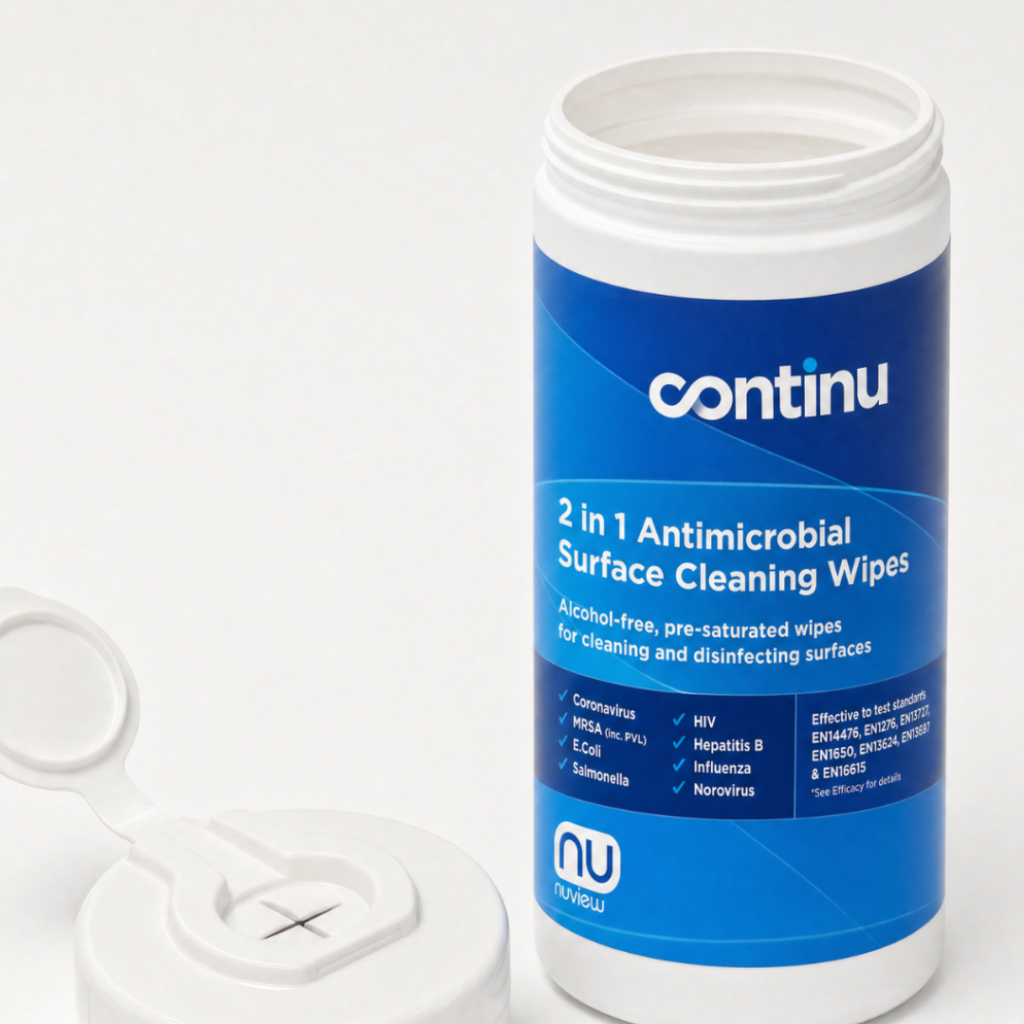
In high-volume clinical environments — from dental practices and private healthcare networks to commercial facilities — surface disinfection wipes are an essential daily consumable. They deliver rapid pathogen reduction, protect critical surface assets, and maintain strict EN compliance across high-touch clinical zones.
However, conventional reliance on single-use rigid plastic canisters introduces a quiet operational inefficiency.
When a tub of wipes runs dry, the default workflow in most facilities is immediate disposal. Across a multi-room practice or regional care group, this single habit accounts for thousands of discarded High-Density Polyethylene (HDPE) canisters every year.
The scale of this issue is substantial: NHS providers in England generate over 150,000 tonnes of clinical waste annually — a significant portion of which comprises rigid plastic packaging and non-organic consumables heading directly to high-temperature incineration. Across the broader UK healthcare sector, single-use rigid plastics account for roughly 30% of routine clinical consumable waste volume. This habit directly drives up clinical waste fees, inflates procurement overheads, and bloats stockroom storage requirements.
At Continu Disinfection, we believe true surface stewardship requires balancing high-level chemical efficacy with practical operational efficiency.
The Sustainability Paradox in Infection Control
The infection control industry faces a structural reality: surface disinfection wipes demand durable, moisture-impermeable plastic packaging. Alternative paper or unsealed materials cannot hold complex aqueous antimicrobial chemistries without drying out or degrading over time.
Because plastic packaging remains necessary for clinical safety, operational focus must shift to minimising packaging volume, sourcing locally, and maximising operational lifespan.
This shift is no longer optional. With the NHS committing to reaching Net Zero for its supply chain (Scope 3) by 2045, healthcare procurement teams and facility managers are increasingly audited on reducing virgin plastic packaging and transport miles. Container reuse offers one of the fastest, most immediate routes to hitting these Scope 3 packaging carbon targets.
Continu addresses this challenge through a clear, two-pronged operational strategy:
1. Complete UK Supply Chain Sovereignty
Relying on imported hygiene supplies leaves facilities vulnerable to international shipping bottlenecks, currency fluctuations, and elevated transport carbon miles. 100% of Continu products are formulated, manufactured, and packaged within the UK. By eliminating overseas freight, we deliver complete supply stability while significantly reducing transport logistics emissions.
2. The Refill Paradigm. Cutting Waste & Storage Footprint
Rather than treating rigid wipe tubs as single-use disposables, Continu’s packaging strategy transforms the tub into a long-term facility asset.
By switching to Continu 2-in-1 Antimicrobial Surface Wipe Refill Pouches practices can achieve:
-
Plastic Waste Reduction. Flexible refill pouches use up to 80% less plastic by weight compared to standard rigid canisters.
-
Storage Optimisation. Flat-packed refill pouches occupy a fraction of the shelf space required for stacked hard canisters, reclaiming valuable stockroom capacity.
-
Cost Efficiency. Procurement teams cut per-wipe expenditure by eliminating the recurring cost of paying for rigid plastic hardware with every order.
Strategic Partnering for Better Healthcare Environments
Reducing environmental footprint while maintaining uncompromising EN efficacy is no longer a compromise. By combining UK-manufactured, alcohol-free formulations with practical refill workflows, Continu helps healthcare operators, facility managers, and distributors achieve meaningful reductions in waste, storage footprint, and operational expenditure.
November 11, 2026